
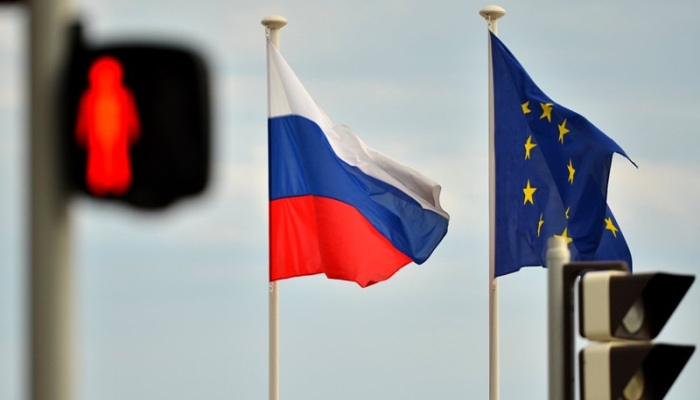
Afrasianet - Al-Said Shibl - Russia believes that the European security environment is no longer governed by clear rules of deterrence, but by a conflict of political and military will that goes beyond the issue of the war in Ukraine.
Russia treats the war in Ukraine as part of a strategic environment far more complex than a bilateral struggle for territory or influence. From Moscow's perspective, this war has roots that stretch back to the post-Cold War era, when Europe underwent a complete reconfiguration of its security system that did not take into account Russia's interests or its status as a major power.
Thus, even if Russia theoretically agrees to the suspension of military operations and responds to US President Donald Trump's proposals, the central elements of the threat will not disappear, because they originate in broader European and Western policies, not just in Ukraine.
Since the collapse of the Soviet Union, NATO has expanded fivefold, to include fourteen new countries in Eastern Europe and the Balkans.
This expansion, which began in 1999 with the accession of Poland, Hungary and the Czech Republic, and then culminated with the accession of the three Baltic states in 2004, was seen in Moscow as a unilateral change in the European security equation. Despite verbal pledges to the Soviet leadership in 1990 that NATO would not "move an inch east," the reality was quite the opposite, prompting Russia, since Putin's early days, to demand a new security framework that would ensure a safe distance between its borders and the military structure For the oath.
In this context, the path that Moscow resorted to in December 2021 was not an unfounded escalation, but a reaffirmation of Russian concerns that had been ignored for two decades. In two official documents, the Russian government demanded the withdrawal of NATO forces from the eastern flank and a return to the 1997 lines, a legal guarantee that Ukraine and Georgia would not join the alliance, and a halt to the deployment of medium- and short-range missiles in Europe, a class of weapons regulated by the INF treaty from which Washington withdrew in 2019 2019.
In other words, Russia at the time demanded no more than its right to live as a safe country without a border threat, but the response of Washington and Western European capitals was to ignore the Russian demands altogether, and to completely refuse to give a legal guarantee that Ukraine or any other country would not join NATO. In light of this Western intransigence, Moscow had no choice but to preemptively escalate, and in less than a month, Russia recognized the independence of Donetsk and Lugansk, and then launched a "special military operation" in Ukraine on February 24.
Russia is aware that it has become for many European leaders "an adversary that must be broken morally and militarily first, and then eliminated once and for all", there are countries such as Germany, Poland and the Baltic states that have become based their foreign policies on the central premise that "Russia is a permanent strategic adversary", and this trend emerged years ago, when Lithuania, Estonia, and Latvia began to restructure their armies and develop electronic surveillance systems targeting any Russian activity, while Poland increased its military budget to more than 4% of the output The country, the highest percentage in Europe, has also sought to buy long-range U.S. defense systems, in escalatory steps that Moscow would naturally see as part of an attempt to encircle them militarily.
These shifts make Russia believe that the European security environment is no longer governed by clear deterrence rules, but by a conflict of political and military will that goes beyond the issue of the war in Ukraine.
Therefore, when covert, intelligence, or cyber operations carried out by the Russians within certain European countries are revealed, they should not be seen as interference in the affairs of others, as much as they are preventive defensive operations, aimed at limiting the ability of those countries to directly influence Russian security.
Russia from within... And the battle for survival
If external pressures have reshaped Russia's security calculations in its European surroundings, its greatest impact has been felt at home, as the state has been forced to rearrange its institutions in accordance with the nature of a conflict that it has come to see as a battle for survival.
Internally, the war has forced a logical restructuring of the Russian state, with the military and security services—the backbone of any country facing an existential threat—becoming more efficient and influential, while the role of the traditional civilian bureaucracy has declined in favor of faster decision-making in wartime.
Naturally, the scope of the NSA's intervention in matters such as foreign policy will expand as the one most capable of dealing with an international environment that defines Russia as a "rising power that must not be allowed to continue." Even before the outbreak of the Ukraine war, Boris Johnson, the former prime minister of the United Kingdom, was speaking at a public conference that "Russia under Putin represents the greatest and most acute threat to Europe's security," and years before that, the chairman of the US Joint Chiefs of Staff, Joseph Dunford, He declares: "Russia has become the biggest threat, and it must be confronted."
At the same time, in light of these complex circumstances, a clear overlap has emerged between the military and the Russian economy, especially with the expansion of defense contracts. These contracts have not only been used to support the war effort, but have also become a tool to revitalize the economy in major industrial regions, such as Yekaterinburg, Kazan, and Novosibirsk. From Moscow's perspective, this fusion of industry and military is not a new phenomenon, but rather an extension of an industrial legacy that dates back to the Soviet era when the "military-industrial complex" was one of the engines of economic growth.
Why did Russia resort to "shadow wars"?
Over the course of three years, CNN and BBC guests have provided a piecemeal analysis of the Russian government's extraterritorial missions to mobilize international public opinion against it, considering that it conducts many military and economic activities in the shadows, and always seeks to hide its movements from view.
The first, less difficult, is to block the way for Western intelligence services to be able to recruit Russian citizens working or studying abroad as spies against their country.
The second, and the most dangerous, revolves around how to circumvent Western sanctions, which are not aimed at punishing Moscow for entering into a war with Kyiv, but rather starving the Russian people themselves, and forcing them to abandon all slogans related to sovereignty and national pride .
In fact, the Russian state apparatus faces an unprecedented challenge to circumvent more than 21,000 Western sanctions, and this challenge is the "real shadow wars." In order for the Russian state to export its oil to the world, it operates a fleet of more than 1,000 old, uninsured tankers, transporting 70% of its exports to China and India, using ship-to-ship diversions and turning off tracking devices. Moscow also relies on intermediary countries to obtain banned Western goods and technology, which is what the Russians need today From Germany, for example, they get it through Kyrgyzstan, and this has increased German exports to this Central Asian country by 55 times.
On the financial side, Russia has resorted to gold, cryptocurrencies (such as the government-backed A7A5) and mutual liquidation to settle payments without passing through dollars or euros, as well as developing local manufacturing and replacing Western equipment with Chinese ones.
It is the shadow efforts that have enabled Moscow to turn sanctions into a costly but not fatal nuisance, and it is true that there has been a 10-12 percent slowdown in economic growth, but it is limited losses, and an expression of a real achievement for the Russian state institutions, which Western researchers accuse of operating "in secret."
Moscow between London and Washington
Moscow sees the United States as Russia's number one strategic enemy by virtue of Washington's leadership of NATO and its military and economic superiority. However, Russian President Putin faces a different dilemma with Britain: London's hostile attitudes toward Russia are fixed and almost unchangeable, unlike the United States, whose policies may differ relatively from administration to administration.
Since the outbreak of the war in Ukraine, Britain has led Europe's more hawkish stance towards Russia, being the first Western country to supply Kyiv with NLAW anti-armor missiles, and pressuring the rest of Europe to increase armaments. MI6 is also the most active and hostile to Russia in Europe, especially after the Skripal poisoning in Salisbury in 2018, and the subsequent expulsion of diplomats and mutual accusations. Britain also plays a pivotal role in dismantling and confiscating financial and business networks In Europe, those funds have been used to finance Zelensky and his regime.
On a historical level, there are a series of direct conflicts between Russia and Britain, such as the Crimean War, the rivalry over Central Asia, and London's support for Russian refugees and dissidents over the decades. That historical memory makes the Russian leadership more sensitive to Britain.
Britain is indeed more troublesome for Moscow because it is European and geographically closer, and because it is overly hostile and uses intelligence tactics when confrontational, as a substitute for outright confrontation; the United States, as a real superpower, is at the same time negotiable or can reach a temporary freeze on the conflict, especially if it guarantees all parties to its security and interests.
Although he is not a fan of Putin and no less hostile to Russia, he manages his country's affairs with a businessman mentality that focuses on practical gains and interests above any ideological consideration, which allows the Kremlin a clear formula for understanding or reaching interim arrangements that reduce the intensity of the conflict.
It may be enough for Washington that Moscow has lost all of its strategic asset in the Middle East, in the blink of an eye, with the collapse of the regime of Bashar al-Assad, the region's most important and prominent ally for decades, which has been a mainstay of Russia's international standing.
Ukraine war as a tool to reshape Russian-European relations
In the context of the Ukraine war, it is true that many European countries declare hostility to Russia, and Moscow is trying to counter this with maximum force, whether through direct war or through its intelligence services.
At the same time, however, Russia is still eager to develop its relations with European countries that want to get out of the political track led by London and Washington; it prefers to confront only those who declare hostility against it.
It is important to note that the Ukraine war was a belated extension of the 2014 European Maidan protests, which, according to Russian reading and a number of independent analyses, were directed and sponsored by Western powers to topple President-elect Viktor Yanukovych, Moscow's closest ally. The aim was to encircle Russia, prevent its expansion within Europe, and disrupt the economic and military agreements that were in the process of being prepared at the time.
Moscow believes that the essence of the problem lies not in its behavior, but in the rejection of any form of Russian-European expansion or rapprochement by Western leaders and influential leaders within the administration of former US President Barack Obama
For this reason, Russia does not want to be trapped within the European continent; on the contrary, it seeks good-neighborly relations based on equality rather than dependency.
Thus, by demonstrating its strength in the Ukraine war, Russia is trying to re-engineer the entire European landscape and reshape the balances of the international system, with the aim of asserting its ability to protect its existence from threats from others, protect its national security, and prevent any expansion of NATO to the east.
Ultimately, Moscow aspires to establish balanced, equitable, and non-hostile relations with European countries, while reserving its right to respond to any direct threat.